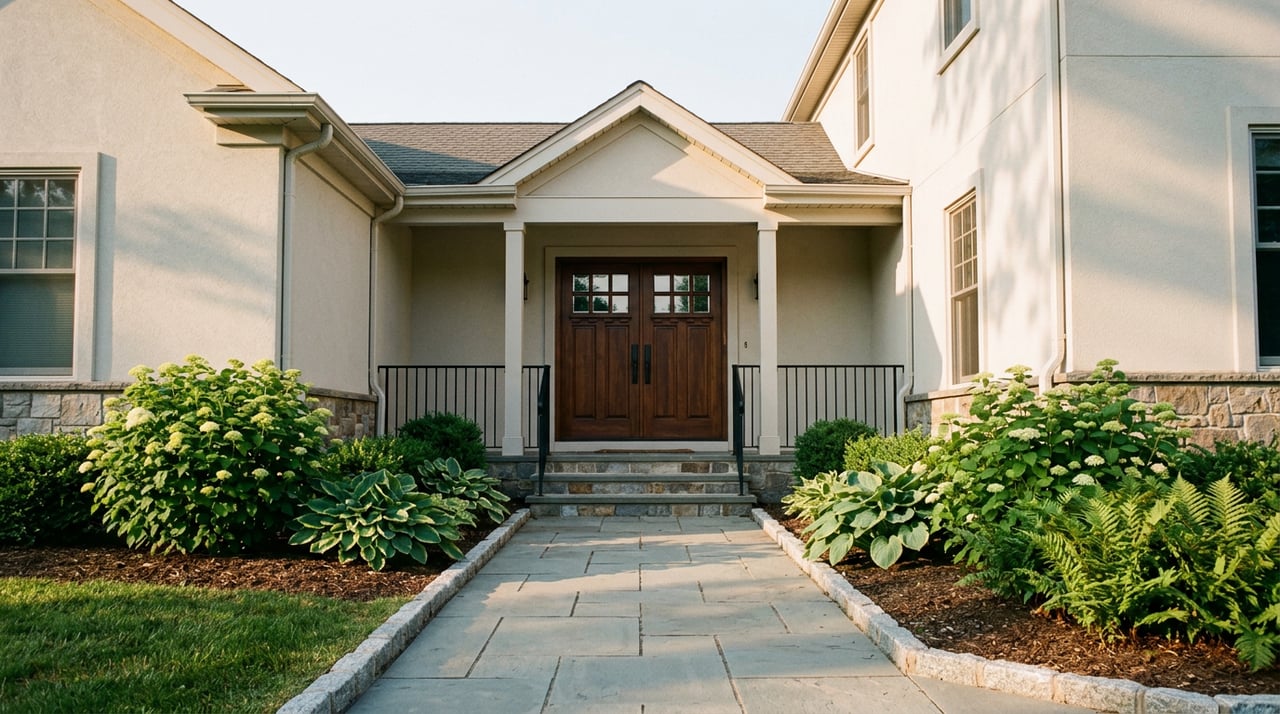
A seller in Paramus hears "smoke detector certificate" and assumes it means swapping a few nine-volt batteries the week before closing. That assumption holds up fine in a house built in 2015. It falls apart in a house built in 1963, which happens to be the median construction year for homes across the borough. Roughly six out of ten Paramus houses went up between the 1940s and the 1960s, the classic run of ranches, split-levels, raised ranches, and capes that still define most residential streets here. Those houses have had sixty to eighty years to accumulate additions, finished basements, pool installs, generators, and solar arrays
That accumulated history, not the detectors themselves, is what actually slows Paramus closings down.
The Step Before the Application
New Jersey law requires a Certificate of Smoke Detector, Carbon Monoxide Alarm, and Portable Fire Extinguisher Compliance before any one- or two-family home in the state can change hands. The requirement comes from the state's Uniform Fire Code and is administered locally, with the actual application and inspection routed through the New Jersey Division of Fire Safety's statewide portal. It is not a Paramus quirk. Every town runs some version of it, and the certificate is mandatory for closing statewide.
What is specific to Paramus is what the borough asks you to do before it will even schedule the inspection. According to the Paramus Building Department's own instructions, a seller applying for the Certificate of Compliance should first stop by the Building Department to confirm that every permit ever issued on the property has been formally closed out. Only after that confirmation does the $100 application fee and the actual appointment come into play. Inspections themselves run daily, but only in a narrow 9 a.m. to noon window.
That sequencing matters more than the fee. A permit that was pulled and never closed does not disappear over time. It sits on the property's record indefinitely, waiting for someone to notice.
What "Never Closed Out" Actually Looks Like
Here is the sequence most Paramus sellers walk through, whether they expect to or not:
- Visit the Building Department and ask them to check the property's permit history.
- Resolve any open or unclosed permits before submitting anything else.
- Submit the Certificate of Compliance application with the $100 fee.
- Schedule the inspection, which happens daily between 9 a.m. and noon.
- Pass the walkthrough and receive the certificate, which Bronzino Law says is valid for six months from issuance.
Step two is where mid-century houses run into trouble. A finished basement added in the 1980s. A pool installed in the 1990s. An oil tank abandoned in place decades ago rather than properly closed. A generator or solar array added more recently by an owner who assumed the electrician handled the paperwork. Any one of these, if the final inspection was never scheduled or the permit was never signed off, becomes a line item the Building Department flags the moment a resale application comes in.
The Paramus construction fee schedule gives a sense of how many categories of past work carry this risk on an older lot:
| Past improvement | Typical Paramus permit fee |
|---|---|
| Residential generator | $75 |
| Solar installation | $75 |
| Oil tank abandonment | $75 |
| Prefab fireplace or insert | $75 |
| Residential fire alarm system | $150 |
| Certificate of continued occupancy (if triggered) | $300 |
None of these fees are large on their own. The risk isn't the dollar amount. It's the discovery, three weeks before a scheduled closing, that a permit from a project completed under a previous owner was never closed, and that resolving it means pulling records, possibly re-inspecting the work, and waiting on a borough calendar that wasn't built around your closing date.
The Paramus Fire Prevention Bureau describes its own resale inspections as serving two purposes at once: confirming compliance with the state's smoke and carbon monoxide detector rules, and verifying that the building hasn't deviated from its originally approved construction plans. Both checks are part of the same visit.
The Smoke Detectors Are the Easy Part
Once the permit history is clear, the physical inspection is usually the fast part of the process. According to Wyckoff Fire Prevention guidance, New Jersey's detector rules are well established at this point: units generally need to be under ten years old, hardwired systems cannot be legally downgraded to battery-only replacements. Placement follows a fairly standard pattern. If your detectors are outdated, that's a same-day or same-week fix. Buy new units, confirm placement, done.
Compare that to an unresolved permit. A detector swap is a hardware store trip. A permit that needs to go back through review, or a project that needs a licensed contractor to sign off on work completed years earlier, is a scheduling problem that doesn't move at the speed of a closing date. This is the actual asymmetry sellers of older Paramus homes should plan around: the part everyone worries about is the part that's easiest to fix, and the part nobody thinks to check is the one that can stall a file.
What This Means If You're Selling a Ranch or Split-Level Here
If your Paramus home dates to the postwar building boom, the practical move is to treat the Building Department visit as step one of listing prep, not step one of the closing process. Ask for a permit history pull before you sign with a photographer or set a listing date. If something surfaces, you have months to resolve it instead of days.
Buyers should also know that a firm mortgage timeline can add urgency to this process. If you're purchasing a mid-century home in Paramus and your closing date is firm, it's worth asking your agent directly whether the seller has already started this process, because a six-month-old certificate that expires before your closing is a real possibility on a deal that drags.
A Few Straight Answers
Does every home sale in Paramus need this certificate? Yes. It applies to one- and two-family homes statewide under New Jersey's Uniform Fire Code, and Paramus administers it through its own Building Department with a $100 application fee for sale transactions.
How long is the certificate good for once issued? Six months from the date of issuance. If your closing slips past that window, the certificate will no longer be valid.
What if I finished work on my house years ago and never got the final inspection? That's precisely the scenario the Building Department's permit-history check is designed to catch. It's far better to find out during listing prep than during attorney review, when the timeline has far less give.
A house that's been in the family, or on the same street, since the Kennedy administration carries decades of small decisions that felt final at the time. Most of those decisions never come up again. This is the one place they can. If you're planning to sell a Paramus ranch, split-level, or cape, the smart move is to find out what's sitting in your permit file before a buyer's attorney does. Contact The Doreen Realty Group to talk through a listing timeline that accounts for what your specific address might be carrying, well before you're under contract and racing a six-month clock.
This article is general information, not legal, tax or financial advice. Consult a qualified professional about your situation.